
What This Habit Is Costing You
A garage door that starts closing and then jerks back open isn't being quirky — it's telling you something is blocking, misaligned, or failing, and every day you leave it that way adds strain somewhere else. An opener that keeps fighting a bad sensor or a sticky track burns out its motor faster. A door that won't close at all means your garage sits open to afternoon downpours, humidity, and anyone walking by, and if you're heading into a stretch of storm activity, an open or stuck-open garage door is one of the weaker points in a home's wind defenses. Left alone through another season of heat and moisture, a minor adjustment turns into a motor replacement, a bent track, or a spring that finally lets go while someone is standing underneath it.
What You're Seeing
- Door starts down, stops a few inches from the floor, and reverses back up
- Door won't move at all when you press the opener or wall button
- Opener light blinks a set number of times (a diagnostic code most owners ignore)
- Door closes fine from the wall button but not the remote, or vice versa
- Door reverses only at certain times of day, often when sunlight hits one side of the garage
How a Technician Tracks Down the Cause
1. Safety Sensors First
This is the first thing any technician checks, because it's the most common cause and the cheapest to fix. Every garage door opener has two small photo-eye sensors near the floor on each side of the track. If they're misaligned, dirty, or something is blocking the beam between them, the opener treats it as an obstruction and reverses the door as a safety measure. Florida's humidity causes condensation and a thin film on the lenses, and afternoon storms kick up leaves and pollen that settle right in front of them. A fix here usually means wiping the lenses, realigning the brackets so both LED indicators glow steady instead of blinking, and checking that nothing — a stored bike, a garden hose, a shifted storage bin — sits in the beam's path.
2. Wiring and Connections
If the sensors look aligned and clean but the door still reverses, the next check is the wiring running from each sensor back to the opener unit. Moisture exposure over time corrodes connection points, especially in garages that aren't fully sealed from outside air. A technician checks for loose, pinched, or corroded wire ends and re-terminates or replaces sections as needed.
3. Opener Force and Limit Settings
Every opener has settings that control how far the door travels and how much resistance it will push against before reversing. If these drift out of adjustment — which happens naturally with age and with seasonal expansion of the door panels — the opener may think it's hit an obstruction when it's really just meeting normal resistance near the floor. Recalibrating the travel limits and down-force setting is usually a 10-15 minute adjustment, but it only works as a lasting fix if the mechanical parts underneath are sound.
4. Track Alignment and Rollers
Next comes a physical inspection of the track itself. Humidity and heat cause wood and composite door panels to swell slightly, and that swelling can bind the door against the track just enough to trigger a safety reversal or stop the door from closing altogether. A technician looks for bent sections, loose brackets, worn or cracked rollers, and gaps between the rollers and track. Off-track repair involves re-seating the door in the track, straightening or replacing bent sections, and swapping out rollers that have worn down or seized.
5. Springs and Cables
If the door won't close at all, or closes partway and then struggles, a weakened or broken spring is a likely suspect. Springs carry the full weight of the door, and when one loses tension or snaps, the opener simply doesn't have the lifting or lowering power it needs, so it stalls or reverses to protect the motor. Cables that have frayed or slipped off the drum cause a similar lopsided resistance. Spring repair means replacing the torsion or extension springs with correctly rated ones for the door's weight — this is not a DIY repair, since a loaded spring under tension can cause serious injury. Cable repair involves re-seating or replacing the cable and checking the drums for wear.
6. Opener Motor and Logic Board
If every mechanical and sensor check comes back clean, the issue may be in the opener's motor or logic board itself — components that degrade faster in a hot, humid garage that never quite cools down overnight. This is the least common cause but the most expensive, often pointing toward a full opener replacement rather than a repair.
When to Call Orlando Garage Door Repair
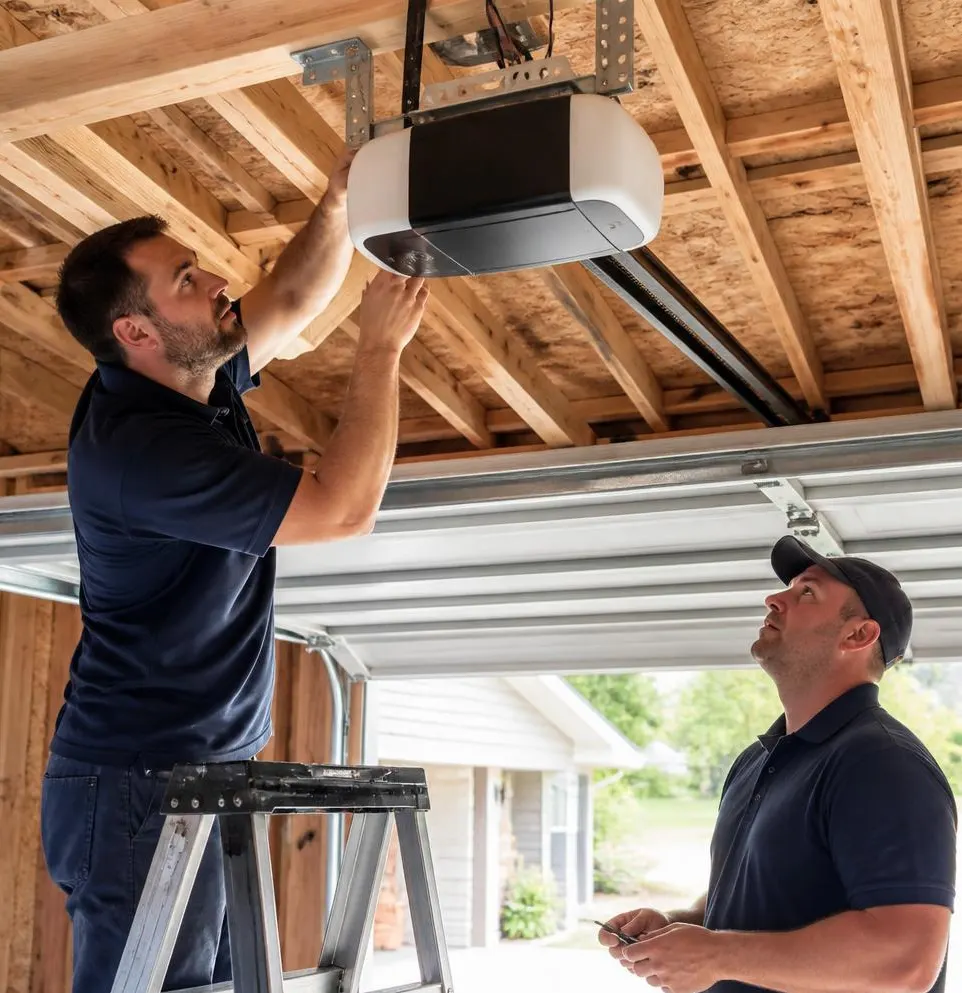
If you've checked the sensors yourself and the door still won't close, or if it's reversing inconsistently and you can't tell why, it's time to call in a technician rather than keep adjusting force settings and hoping. Orlando Garage Door Repair handles this diagnostic process start to finish — checking sensors and wiring, then moving into off track door repair or garage door spring repair depending on what's actually failing, so you're not guessing or replacing parts that didn't need it. For openers that are simply worn out after years in Central Florida heat, garage door opener installation gets you a unit built to handle the humidity and heavier use that local weather demands.
If your garage door is sticking, reversing, or refusing to close, call Orlando Garage Door Repair for same-day service across Orlando, Kissimmee, Winter Park, Dr. Phillips, Windermere, Altamonte Springs, Ocoee, and Lake Buena Vista.